
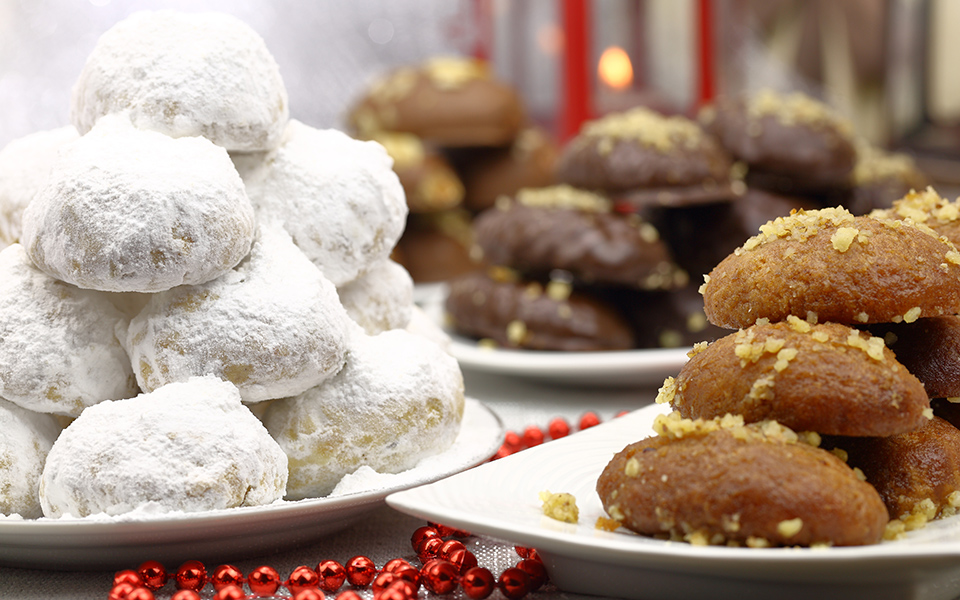
That the Greek people have a really sweet tooth, we already knew. 365 days a year the shop windows are full of pies, cakes and cookies. But in December it’s almost impossible to meet the needs of the Thessalonians. Tsourekia, melomakarona, diples and kourabiedes are typical Christmas delicacies. Around December you will find at least one of these sorts in almost every household and pastry shop of the city.
Indulge in Greek Christmas sweets

One thing is certain: When you see “Melomakarona” in pastry shops or bakeries, you know that Christmas time is just around the corner. Bakeries all over the city line their shelves with melomakarona, kourabiedes and diples, the most common sweet treats of Greek Christmas that are produced only during this season.
Melomakarona: They are made with flour, sugar, orange, pure olive oil, walnuts, herbs (cinnamon, cloves) and of course good quality honey. In many parts of Greece, Melomakarona are regarded as a sweet treat that brings good luck for the New Year.
Kourabiedes: This traditional Greek sweet -snowy- dessert is the embodiment of the festive season. They are made with almond and other nuts and dusted with icing sugar. This icing sugar is the one responsible for betraying you after you eat one.
Diples (Fried Turnovers): Diples are fried folded treats made from thin sheets of dough strips folded while being fried in hot oil. These sweets are then drizzled with honey syrup as they cool down, while cinnamon (and sometimes chopped nuts) is dusted on them. Coming in circular or triangle shapes, these can be easily found throughout the country.
The famous “Tsoureki” with chestnut from Terkenlis: No one can resist a good tsoureki, let alone a stuffed one. Made with fine flour, fresh butter and spices, this Chestnut Cream filled brioche dipped in White Icing is freshly prepared in Terkenlis workshop and served to your festive table or just as treating and gifting.
Vasilopita or how to welcome the New Year the right way.

In Greece we don’t say “Happy New Year”. We say, “WHERE IS VASILOPITA?”. The cutting of this Christmas cake has a specific ritual which is followed with devotion to welcome the New Year.
Vasilopita is dedicated to Saint Basil, the Santa Claus in Greek tradition, who brings the gifts the first night of the new year. Most families cut it right after the changing of the year or after lunch on the 1st of January. Traditionally, a coin is put inside the cake before it is baked. When it is time to cut it, everyone comes around the table and the householder starts assigning pieces to everyone. The first piece, traditionally, is for the Christ, the second for the Virgin Mary, the third for the house and the rest are for the members of the house by order of age. The person whose piece has the coin inside is considered lucky for the rest of the year!


